
Food Waste Prevention
Food Waste Prevention Week is September 28 – October 4, 2026
CalRecycle is proud to support Food Waste Prevention Week, joining more than 700 public and private partners across 49 states and 22 countries. Food Waste Prevention Week is an online and in-person awareness campaign to inspire cultural changes that reduce food waste at home, work, and in our communities. We encourage everyone to take part! Everyone’s participation helps drive meaningful progress toward a sustainable food system.
Preventing food waste is one of the most effective actions Californians can take to reduce greenhouse gas emissions, conserve natural resources, strengthen food security, and save money.
In 2024, California landfilled 16% of our surplus food, nearly 2 million tons. California is committed to reducing wasted food through statewide programs, global and national partnerships, and community engagement to help build a more resilient, sustainable, and equitable food system for all.
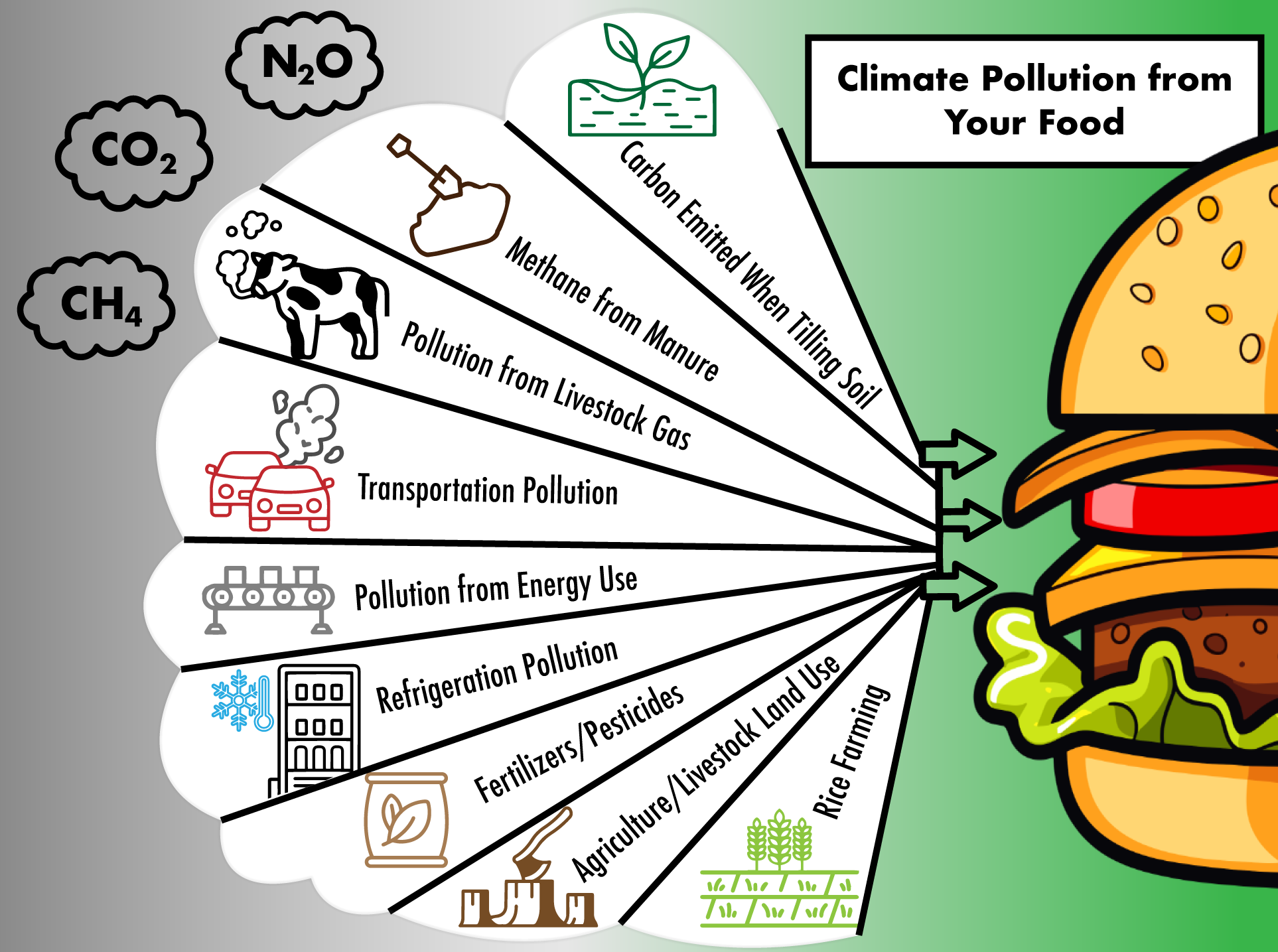
Understanding Uneaten Food
Understanding uneaten food is important for developing waste prevention strategies.
Food Waste, also known as surplus food, is food that goes unsold, unused, or uneaten across the whole supply chain. This is often because it expires at the store, people buy too much, or part of the meal is left uneaten. It includes both edible items and inedible parts, and can end up in different places, such as:
- Donation programs
- Animal feed,
- Composting
- Landfill disposal
Food Scraps refer to the physical nature of the food waste, such as peels, cores, eggshells, trimmings, and bones.
Food Scraps:
- Are energy-rich and still hold nutritional and economic value.
- Can be turned into high-value ingredients for products such as shelf-stable broths, pasta sauces, dry goods, sweeteners, cosmetics, or beverages.
- Can also be converted into feed for livestock and insects.
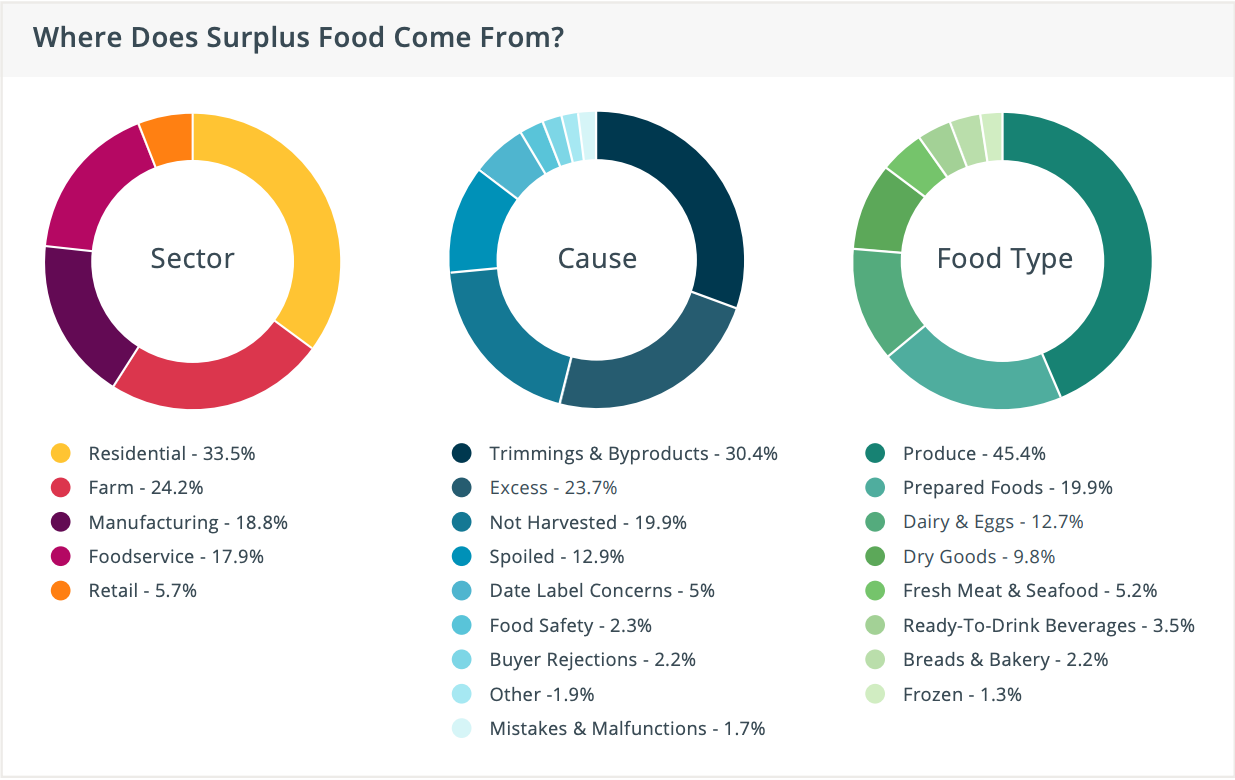
Main contributors to surplus food:
- Sector: Residential 33.5% and Farm 24.2%
- Cause: Trimmings and Byproducts 30.4% and Excess 23.7%
- Food Type: 45.4% and Prepared Foods 19.9%
For more information, see the ReFED 2026 Food Waste Report.
What is Food Waste Prevention?
Avoiding Waste Before It’s Created
Food Waste Prevention, also known as Source Reduction, is the practice of stopping waste before it happens. It focuses on making sure food is fully used at every step of the food supply chain instead of being discarded. This approach is the most cost-effective and environmentally friendly strategy because it keeps food at its highest value rather than having to manage it as waste.
Simple Prevention Strategies:
- Changing how food is purchased, prepared, or stored
- Buy only what is needed
- Store food carefully
- Sharing surplus with the community
- Using leftovers
- Refining processing efficiency on the manufacturing line
- Transforming byproducts into upcycled marketable ingredients or goods
- Creating markets for cosmetically imperfect produce
- Creating local food systems and community networks
- Home and community gardens
- Neighborhood
Resource-conscious living reduces waste, protects natural resources, increases food access, and reinforces a culture where food is appreciated rather than discarded.
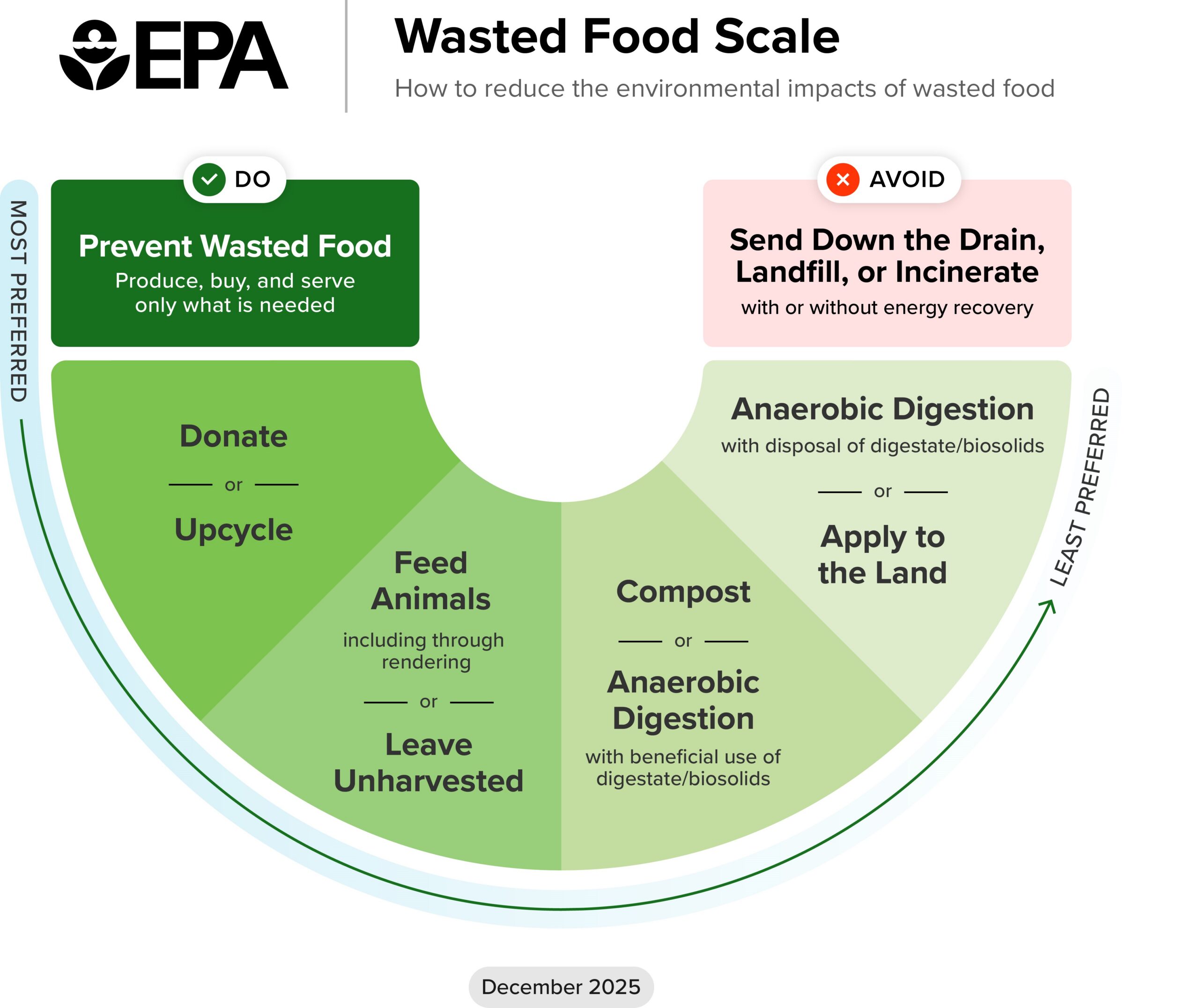
Why Prevent Food Waste?
The impacts of wasted food extend far beyond landfills, touching climate, public health, community well-being, and the economy.
- Climate Mitigation: In 2024, the production, distribution, preparation, storage and disposal of unsold or uneaten food added upto an estimated 2.6 million metric tons, 3.5% of U.S. total greenhouse gas emissions – the equivalent of driving 51 million gas-powered vehicles for a full year.
- Food Security and Donation: In California, at least 1 in 5 households experienced food insecurity in 2024.
- Economic Efficiency: In 2024, 29% of the nation’s food supply went unsold or uneaten, amounting to $380 billion.
- Circular Economy: Reducing food waste is an aim to design out waste. It means keeping material in circulation at its highest value for as long as possible to sustainably regenerate energy and natural systems.
- Conserving Natural Resources: In 2024, food waste in the U.S. required approximately 15% of all freshwaters taken from natural sources. The land needed to grow that food – about 140 million acres – is equivalent in size to California and New York combined.
Initiatives and Programs
- California is advancing food waste reduction through the SB 1383’s Short-Lived Climate Pollutant Reduction Strategy goals of reducing landfilled organic waste and recovering edible food that would otherwise be wasted.
- United Nations Sustainable Development Goal UN SDG 12.3 – Supports global efforts to halve food waste worldwide through data improvement, policy development, and large-scale prevention initiatives
- Food Waste Breakthrough – California serves as a subnational champion, helping build capacity, strengthen data systems, and accelerate food waste prevention strategies across sectors.
- Pacific Coast Food Waste Commitment (PCFWC) – A multi-state public-private partnership with retailers, NGOs, and governments across the West Coast. Retail partners have successfully reduced unsold food rates by 30%, marking a major milestone in regional food waste prevention.
- Food Waste Prevention Week – A national movement where states, cities, and organizations come together annually to raise awareness about food waste through a collaborative media campaign.
Additional Resources
- What is Food Waste Prevention? US EPA Sustainable Management of Food Basics | ReFED Food Waste Problem
- Wasted Food Scale: Wasted Food Scale | US EPA
- Food Waste Research ReFED Newsroom & Articles | ReFED
- US National Strategy for Reducing Food Loss and Waste and Recycling Organics National Strategy for Reducing Food Loss and Waste and Recycling Organics | US EPA
- World Wildlife Fund
- Zero Food Waste Coalition
- SaveTheFood.com
- UCANR Household Toolkit: